2026: The Future Belongs to the Builders
Since last year, I’ve completely transformed how I work by integrating AI tools into my
also published at: https://www.linkedin.com/pulse/2026-future-belongs-builders-karthikeyan-ng-f8elc
Since last year, I’ve completely transformed how I work by integrating AI tools into my development workflow. The difference isn’t just noticeable; it’s exponential. I’m seeing a solid 2-3x boost in productivity—complex tasks that used to take days now take hours.
This isn’t my first attempt with AI. I’ve written books on AI in the past and spent years in the trenches of machine learning. Currently, I’m fully immersed in the crypto space, building infrastructure for the next generation of finance. This unique intersection—AI, Crypto, and my growing obsession with Edge AI** (which I’m planning to write my next book about)—gives me a front-row seat to the massive shifts happening right now.
But I’ve also noticed a flip side to this AI boom. While it amplifies those who know how to wield it, it’s actually making another set of people worse—those who rely on it blindly are producing generic, buggy, or mediocre work. We are seeing a massive divergence in talent.
We are standing on the edge of a drastic alignment across industries. The way we code, build, trade, and learn is about to change fundamentally. But amidst all the fear mongering, I am bullish. I firmly believe that AI is going to create more jobs and add more value than it destroys. We aren’t replacing humans; we are upgrading them.
I’ve analyzed the landscape and identified 14 key shifts that will define 2026. Instead of a random list, I see three clear themes emerging: The Macro Shift, The Technical Reality, and The Human Element.
Here is the breakdown.
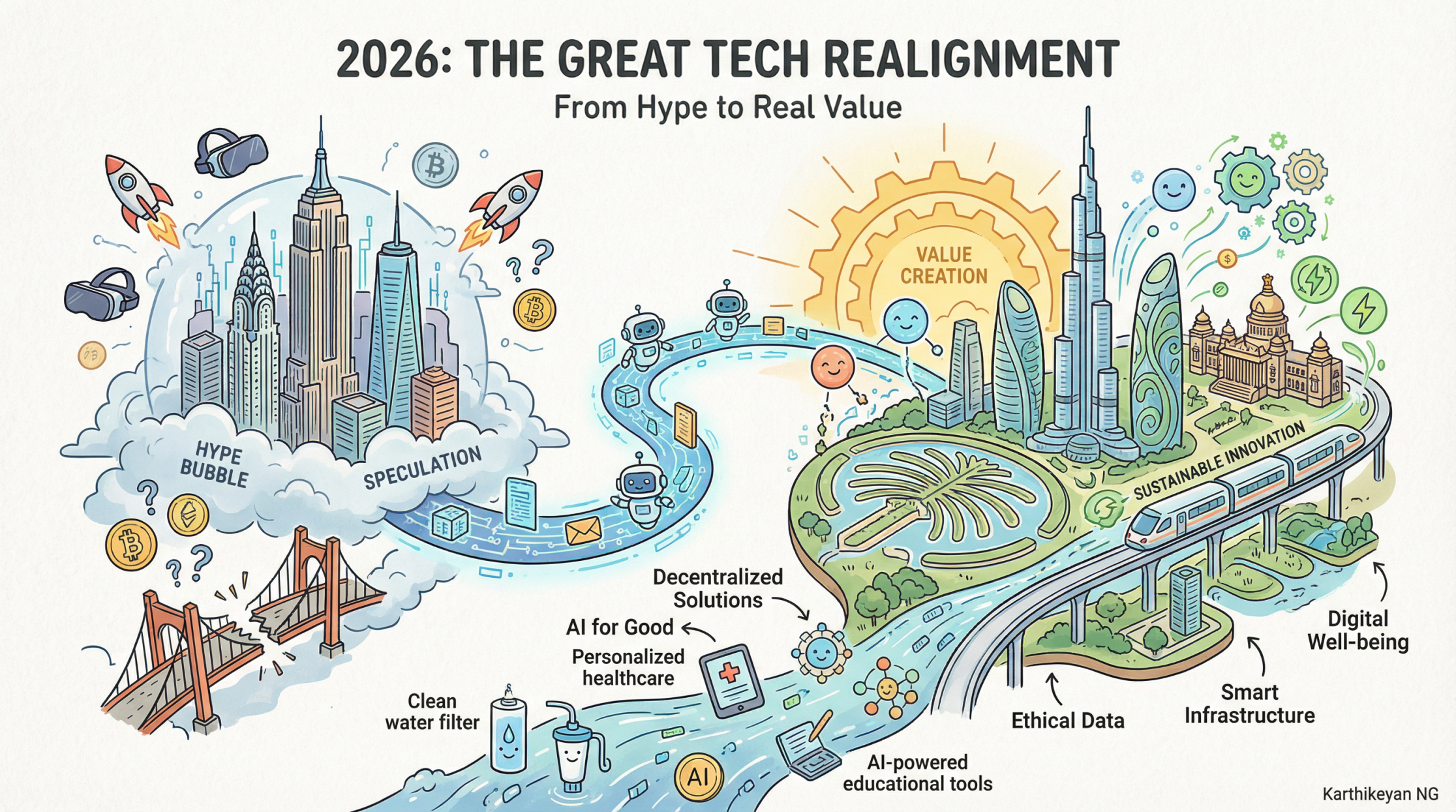
The Great Tech Realignment
We are moving from a cycle of pure hype to a cycle of reality. The “Realignment” isn’t a crash; it’s a correction toward value. The era of “valuation by storytelling” is dead. In 2026, the market will stop asking “What can this AI model do?” and start asking “What revenue does this specific agent generate?”. We are seeing a rotation from general-purpose infrastructure to vertical, profit-generating utility. The builders who survive won’t be the ones with the best demos, but the ones with the best unit economics.
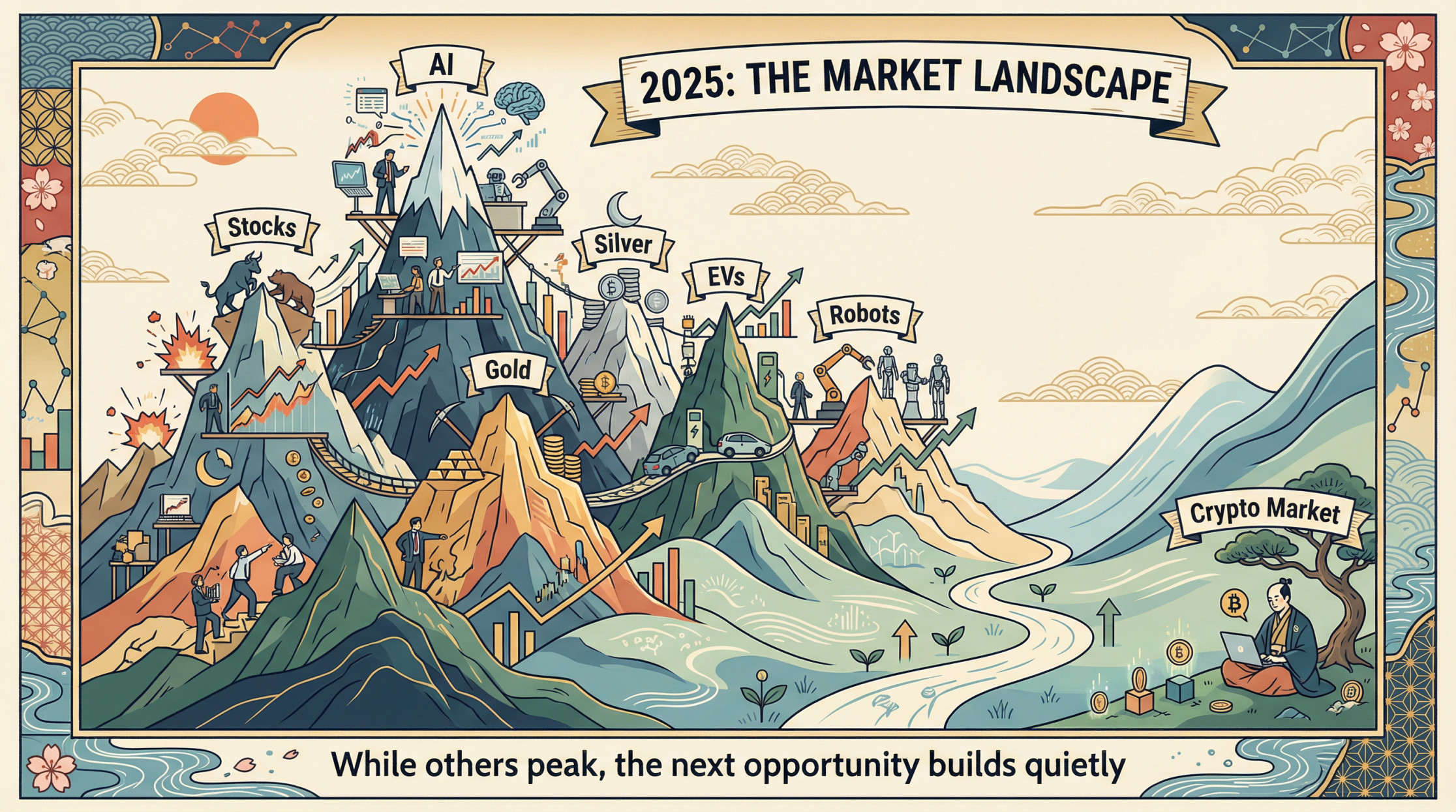
 The Market Disconnect (2025 Context)
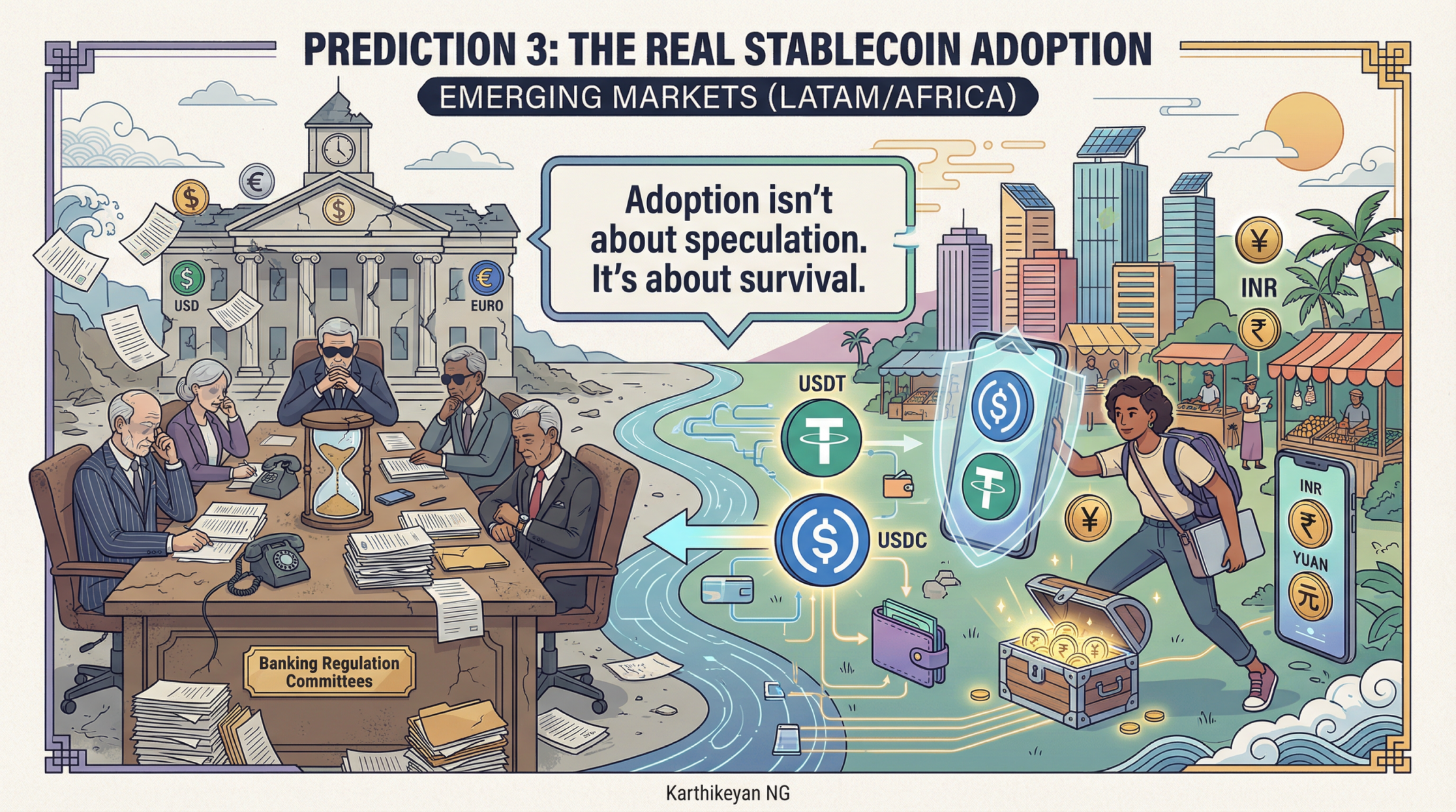
We are witnessing a historical decoupling. Traditional markets—Stocks, Gold, Silver, Tech—are priced for perfection, crowded by passive flows and index funds. It’s a “consensus bubble.” Meanwhile, the crypto market remains the only asset class priced for imperfection. The asymmetry here is blinding: while the S&P 500 fights for single-digit gains against headwinds, decentralized protocols are quietly building the rails for the next decade of finance in a valuation valley. History rewards the contrarian, not the consensus. Not a financial advice. Just an observation.
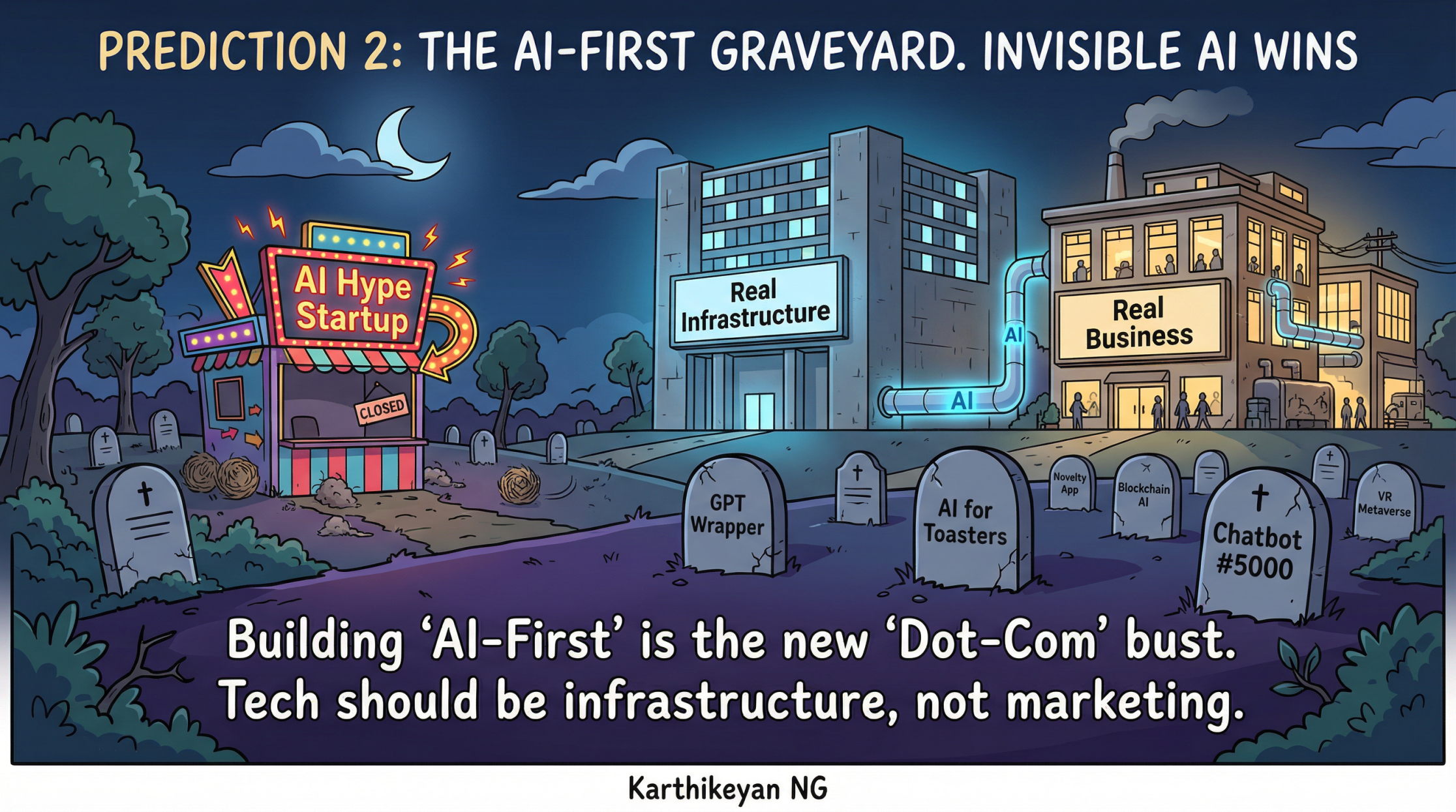
 The AI-First Graveyard
We are seeing a replay of the Dot-Com bubble, but faster. Thousands of startups are currently being funded that are nothing more than thin “wrappers” around OpenAI’s API. They have no proprietary data, and no defense. When the underlying models improve, these businesses will be vaporized overnight. The enduring companies of this cycle will be the ones where AI is invisible—the boring, heavy-lifting infrastructure that solves real problems, not just cool demos.
The Compliance Crash
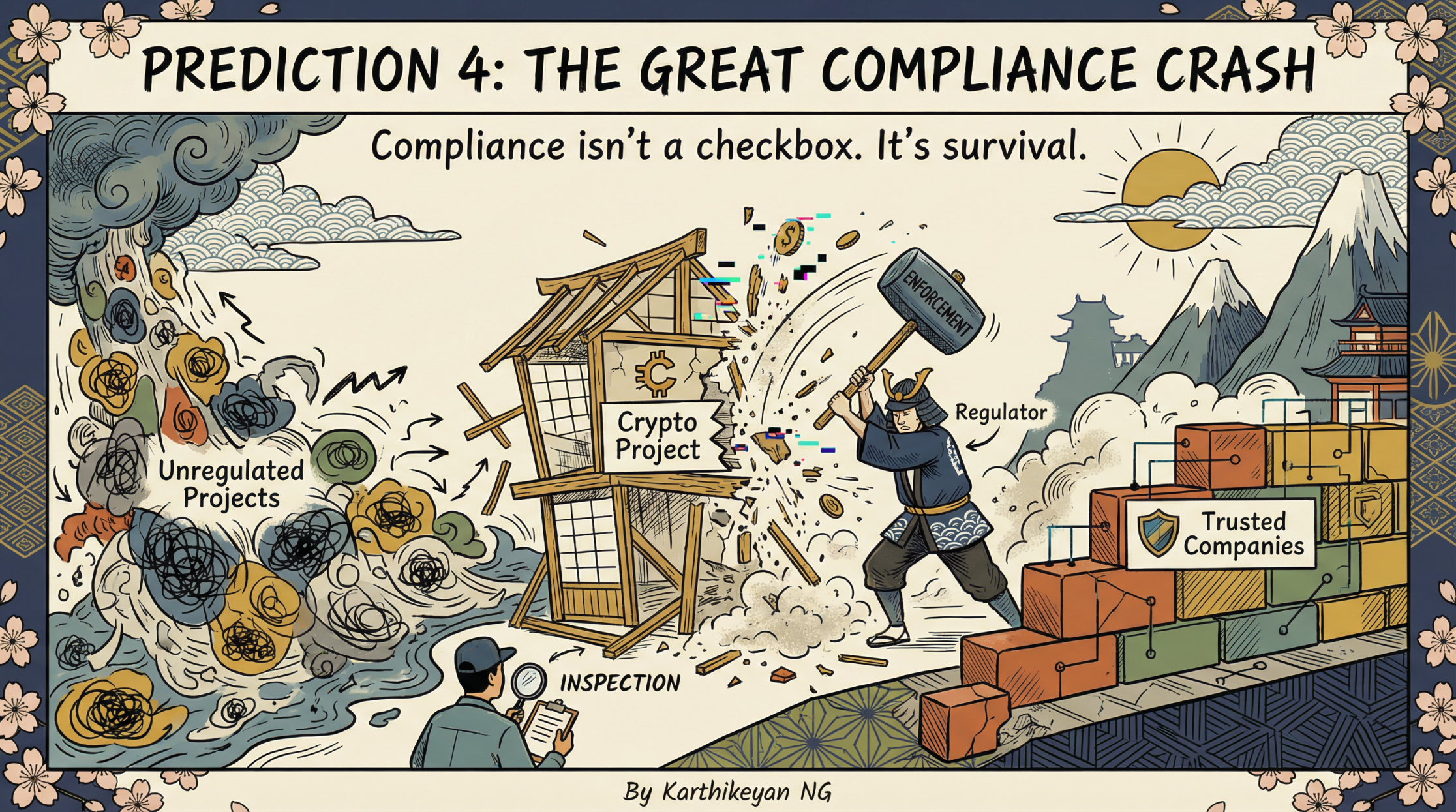
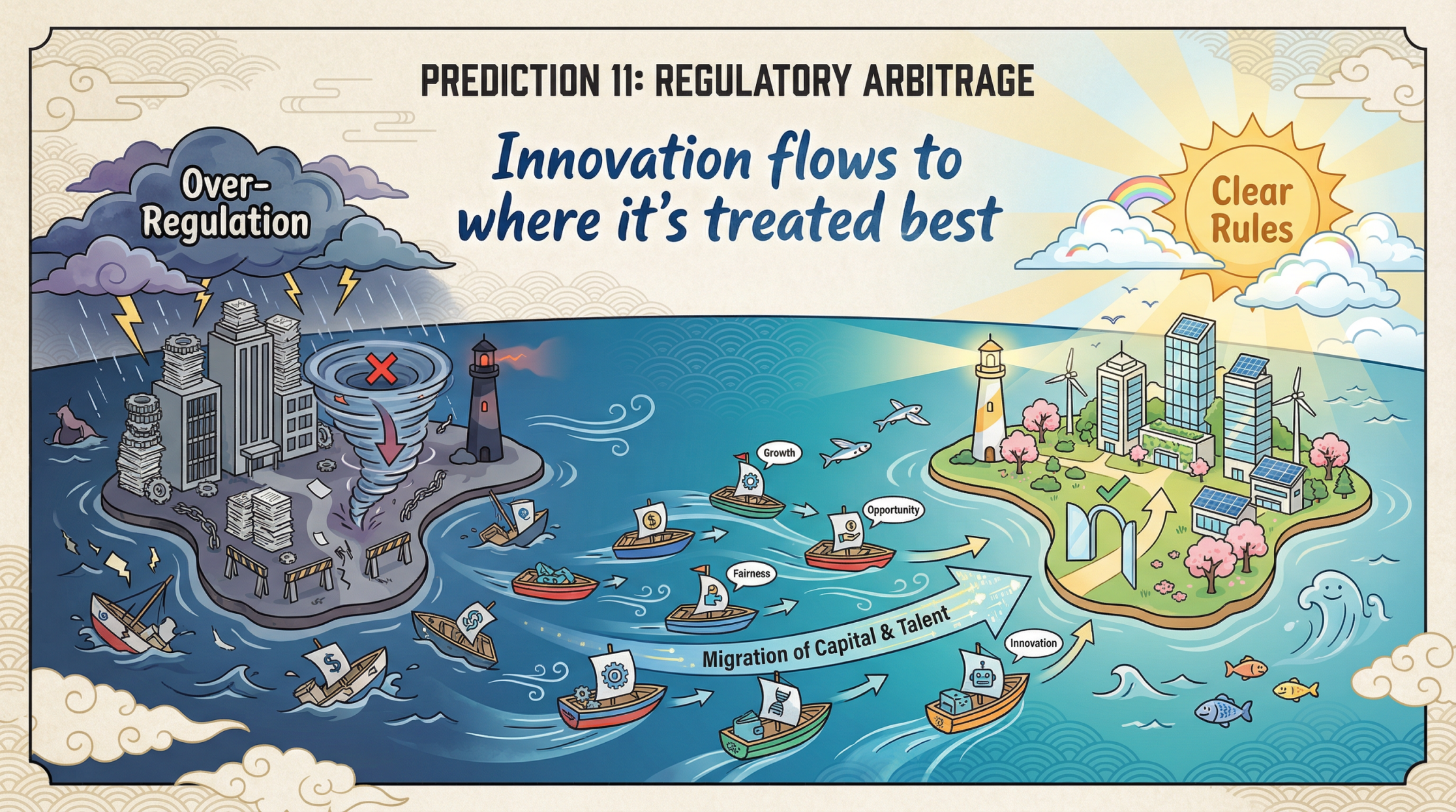
For a decade, “move fast and break things” worked in crypto. That era is over. The next wave of institutional capital requires bridges, not backdoors. By 2026, compliance won’t be a burden; it will be the primary moat. Protocols that have embedded identity and legal clarity at the smart contract level will capture trillions in liquidity, while the “wild west” projects will be relegated to the fringes. Legitimacy is the new liquidity.
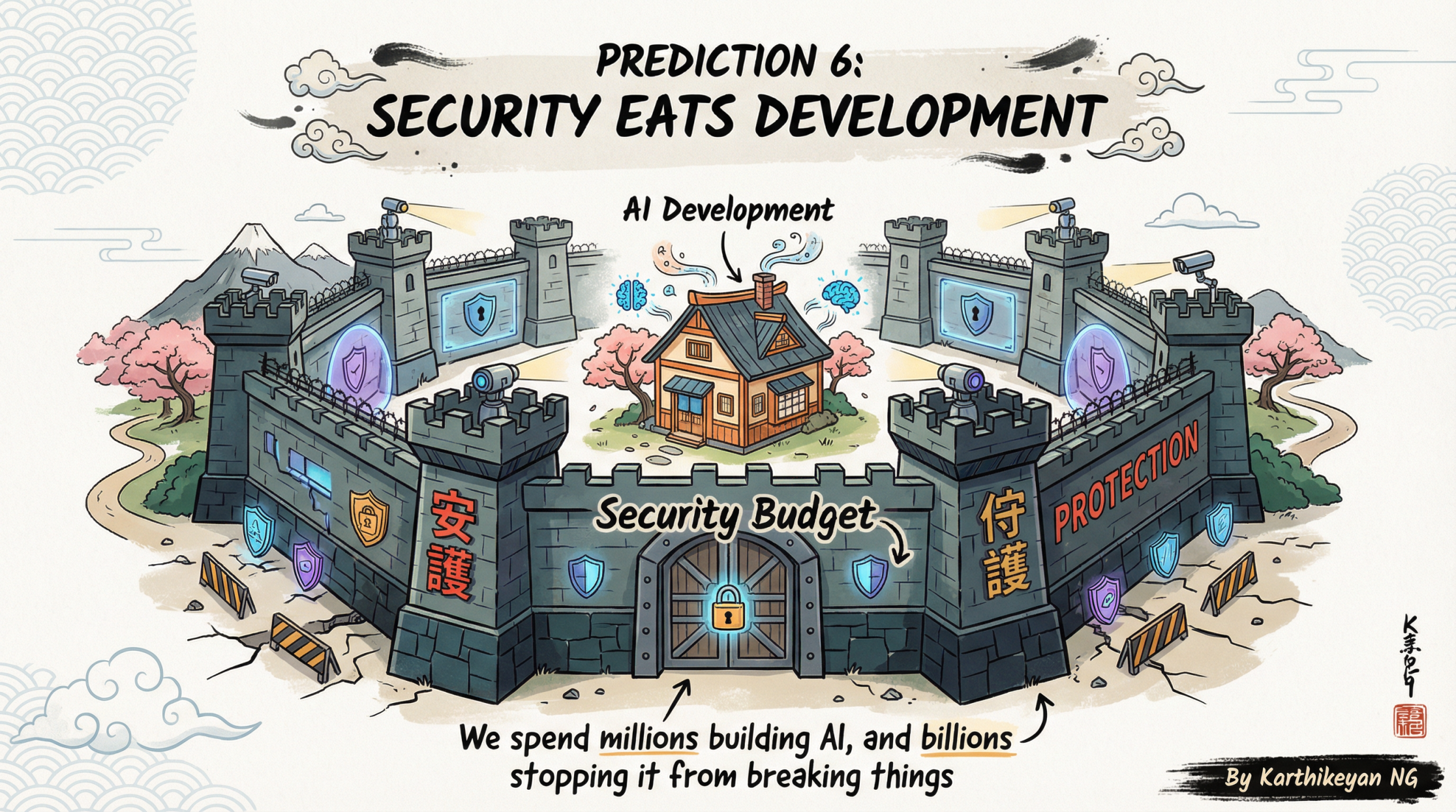
Security Eats Development
We are entering an adversarial arms race. As we deploy millions of autonomous agents, we are exponentially increasing the attack surface of the internet.
**It’s no longer just humans hacking humans; it’s AI hacking AI.
Cybersecurity will cease to be a department and become the product itself. In 2026, the most valuable codebase won’t be the one with the most features, but the one that is impenetrable.
The Training Data Crash
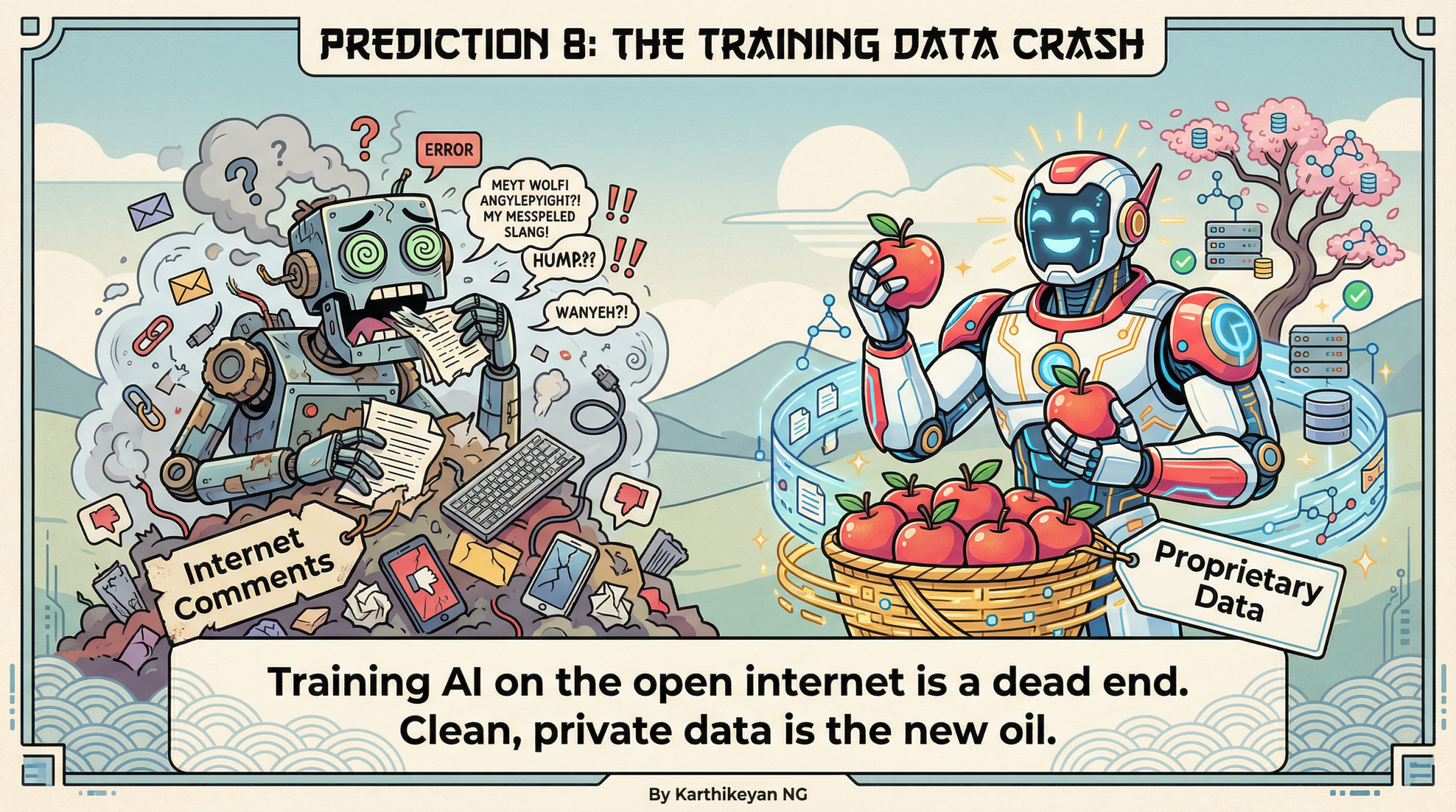
The internet is being poisoned. As AI generates more content, it floods the web with “synthetic” data. Future models trained on this recycled output will suffer from “Model Collapse”—a degenerative loop of hallucination. This makes pre-2023 human-generated data the most precious resource on earth. The next gold rush isn’t for compute; it’s for clean, verified, proprietary human data that the AI hasn’t touched yet.
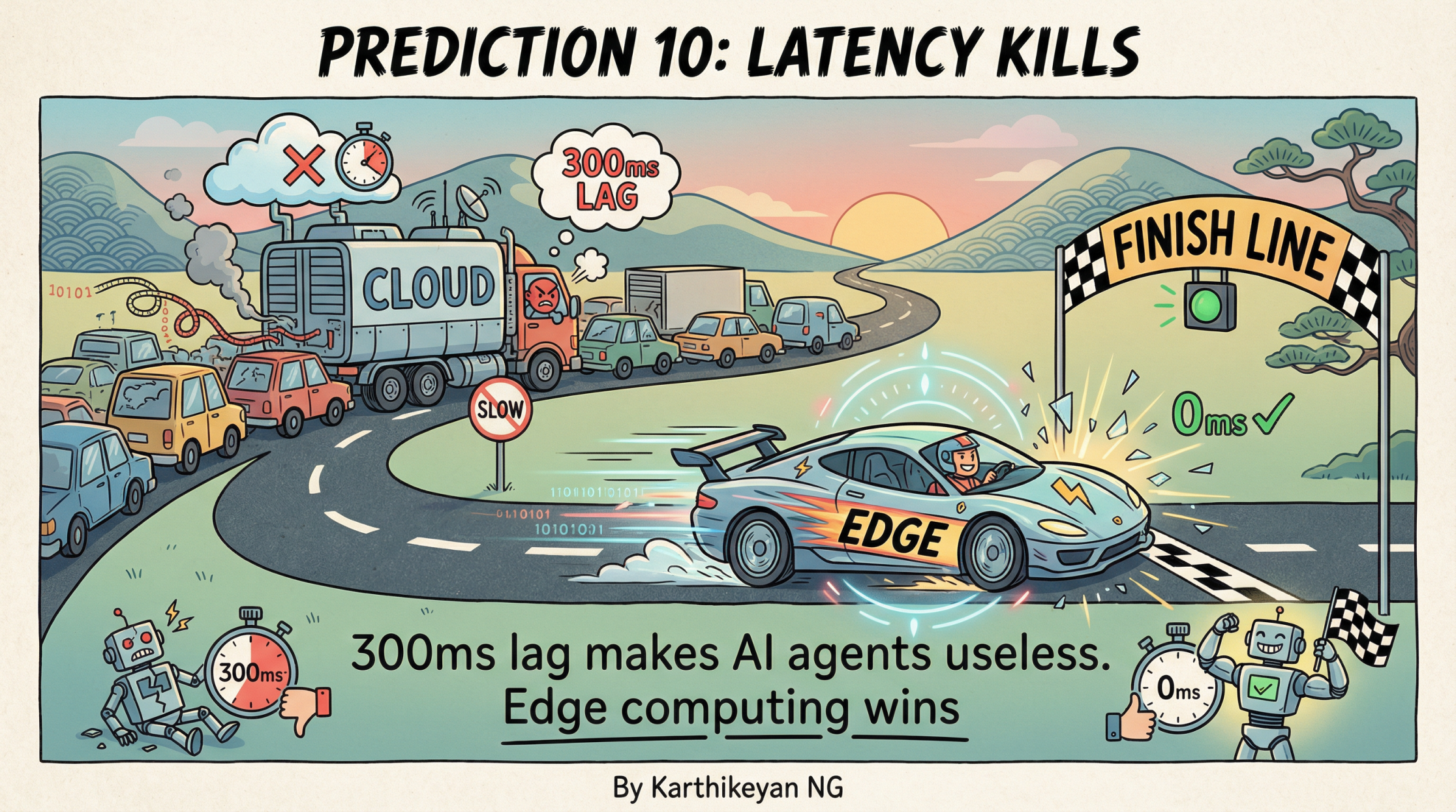
 Edge vs. Cloud
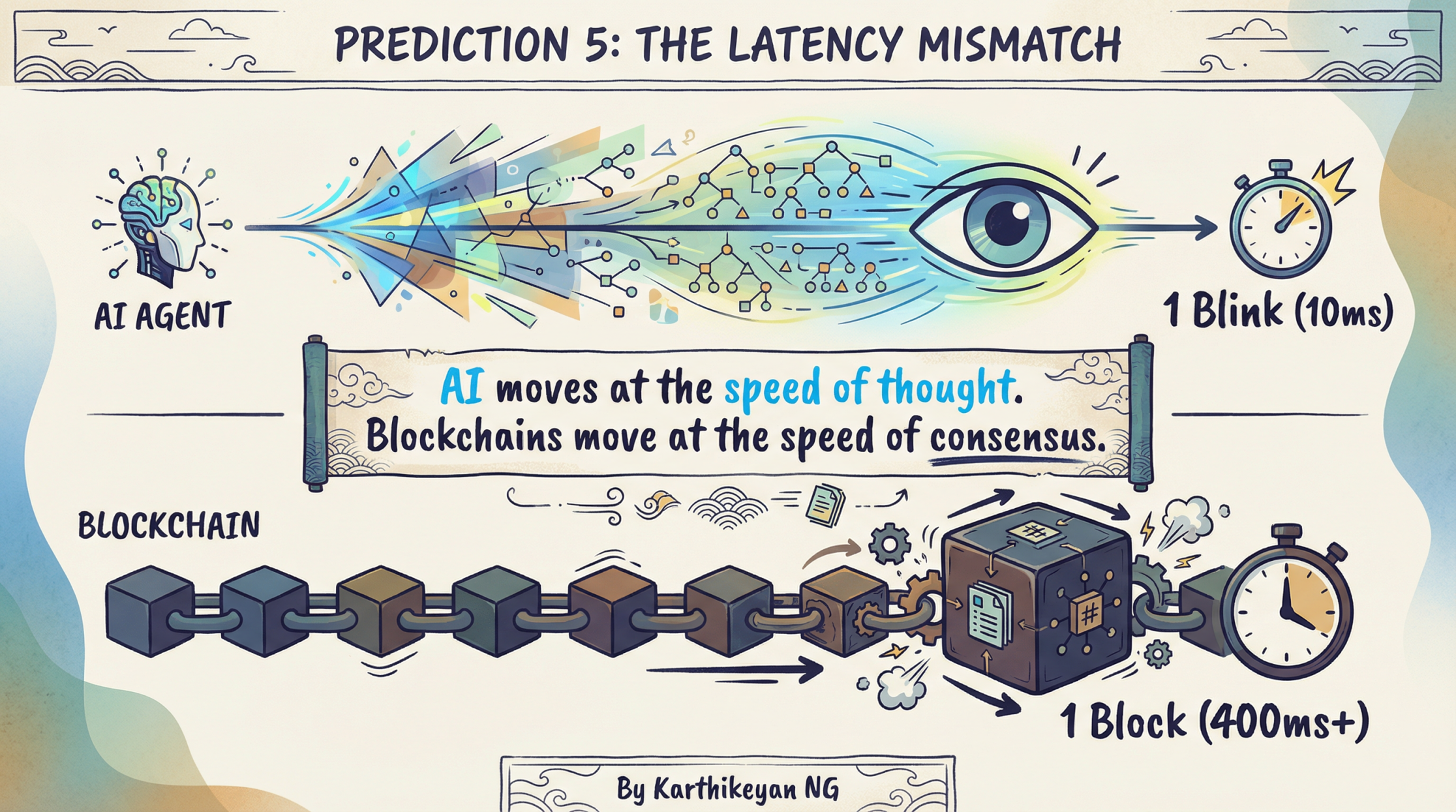
The pendulum of computing is swinging back. Cloud latency is the silent killer of the AI user experience—you can’t have a fluid voice conversation with a 500ms lag. To make AI feel truly “alive,” inference must happen locally. We are moving toward a world of “Edge Intelligence,” where your phone and laptop process your personal context privately and instantly, only reaching out to the cloud for heavy lifting.
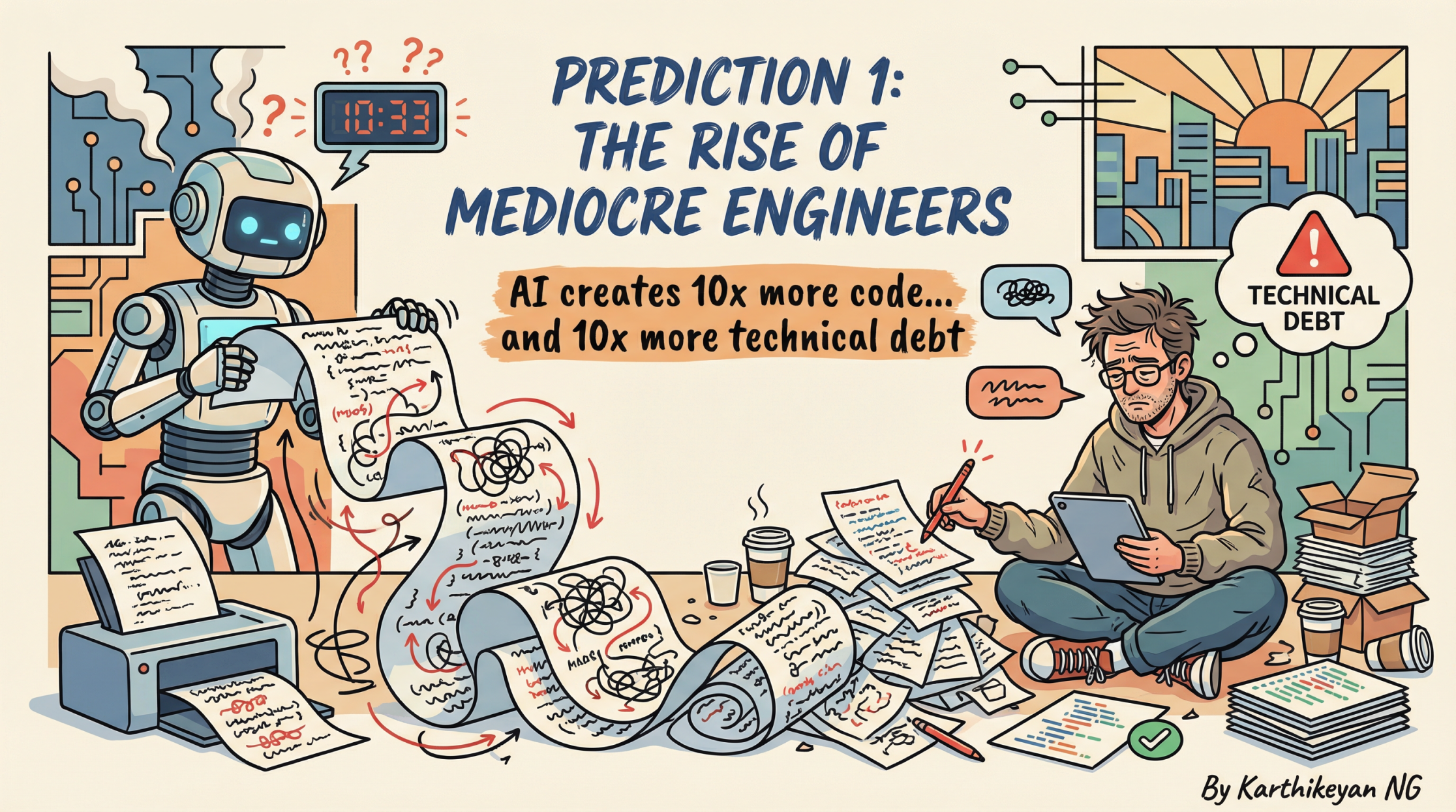
The Tech Debt Bubble
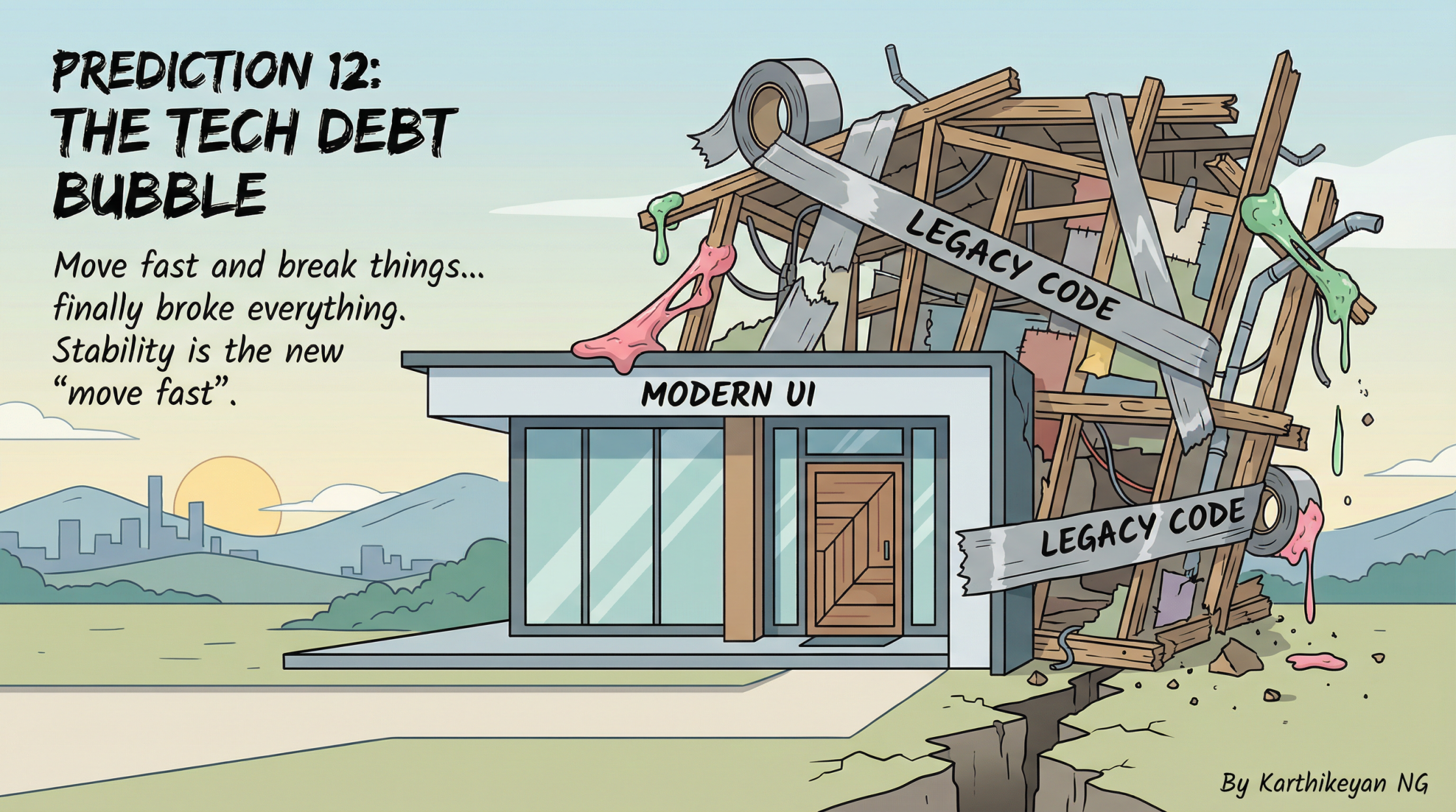
The industry’s rush to “sprinkle AI on everything” is creating a massive bubble of fragile code. We are mixing “Probabilistic” software (AI which is correct 90% of the time) with “Deterministic” software (Banking systems which must be correct 100% of the time). This mismatch is a ticking time bomb. We are building skyscrapers on quicksand. The next few years will see a painful correction where companies are forced to pause new features to rewrite their entire stack. The heroes of 2026 won’t be the ones shipping fast; they will be the ones creating stability in chaos.
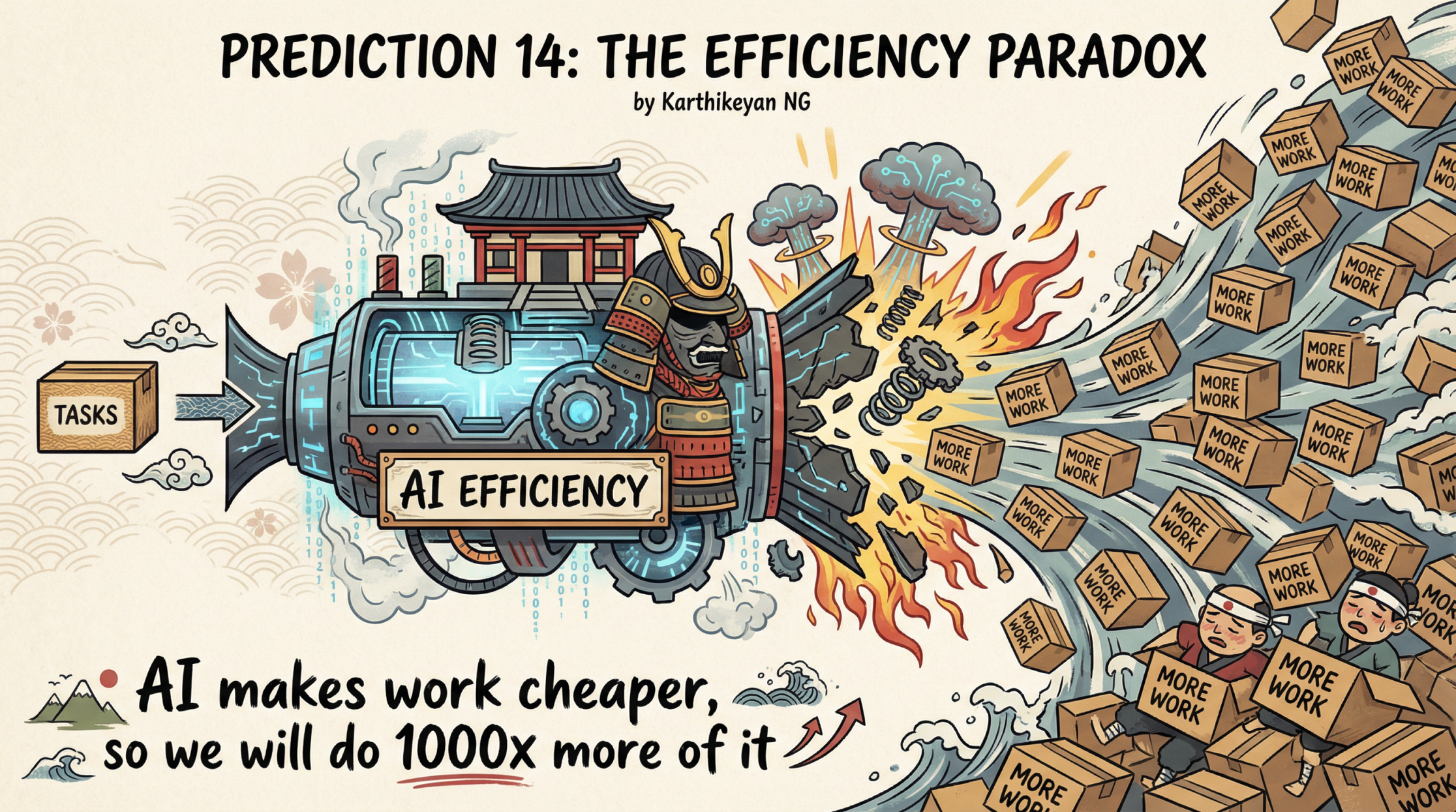
The Efficiency Paradox
There is a counter-intuitive economic theory called Jevons Paradox: as technology increases the efficiency with which a resource is used, the total consumption of that resource increases rather than decreases. The same applies to knowledge work. When AI drives the cost of intelligence to near zero, demand for intelligence doesn’t plateau—it explodes. We won’t just do the same work faster; we will take on projects that were previously economically impossible. We will build software for single users. We will analyze data sets that were too expensive to touch. The ceiling of human ambition is rising, not falling.
The Reality Cycle
Markets move in psychological cycles, not linear lines. We are currently transitioning from the “Peak of Inflated Expectations” (The Party) to the “Trough of Disillusionment” (The Hangover). But this is good news. It is in the quiet, boring trough where the real infrastructure is built. The tourists have left. The gamblers are broke. Now, the builders can finally get to work. This is where generational wealth is actually created.
The Unfair Advantage
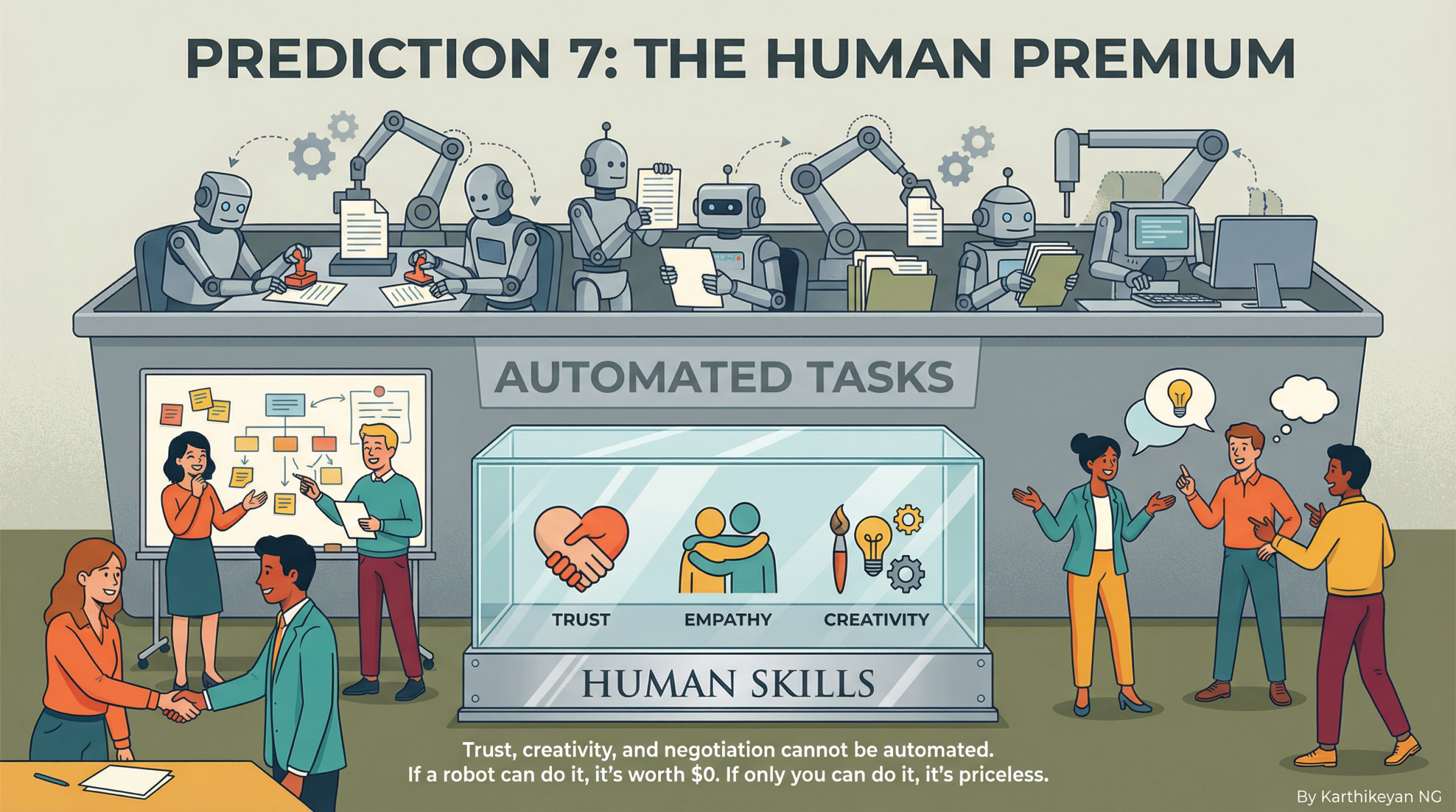
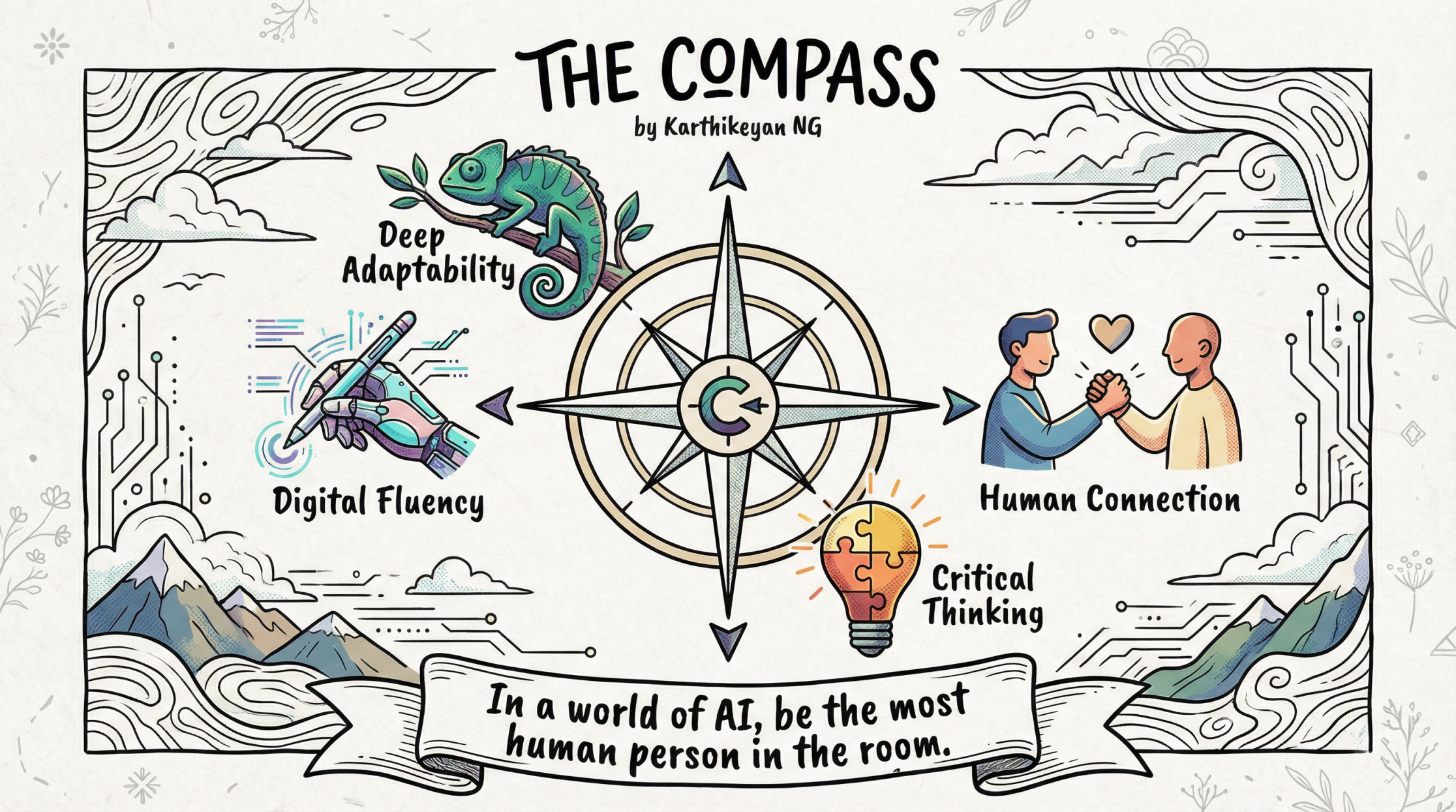
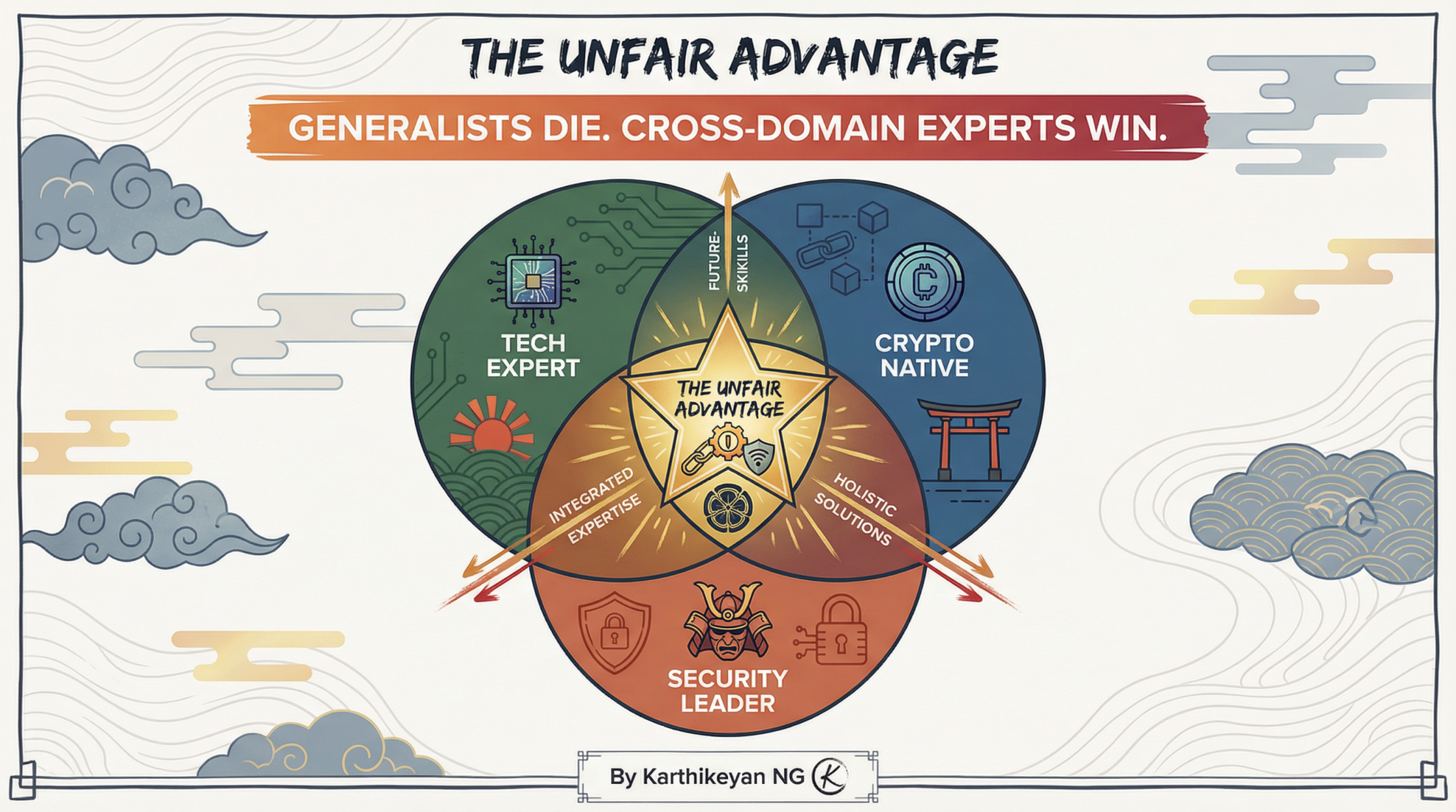
The biggest winners of the next decade will be the “bridge builders.” The engineer who understands finance. The compliance officer who understands smart contracts. The artist who understands code. Innovation happens at the intersections. While the experts stay in their silos, the polymaths who can speak the languages of multiple domains will be the ones architecting the future. Cross-domain expertise is the ultimate moat.
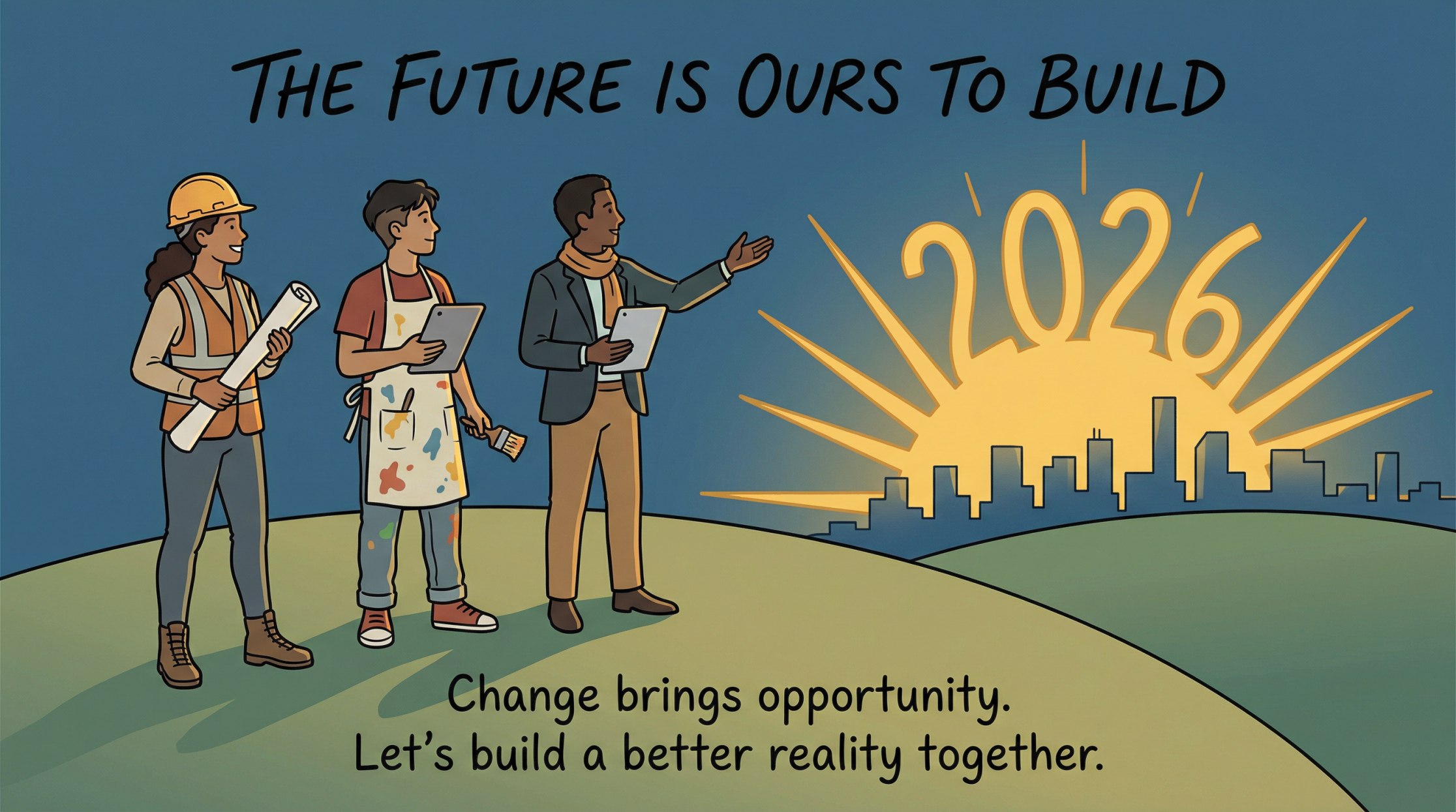
What are your predictions for 2026? Let me know in the comments.**
#AI #Crypto #FutureOfWork #TechTrends2026 #Engineering #CareerGrowth